Life Care Plans in Texas Personal Injury Litigation: Forecasting Lifetime Costs in 2026
In situations involving severe injuries like traumatic brain injuries (TBI), spinal cord injuries (SCI), or serious burns, the medical expenses from the time of the accident until the settlement date typically represent only a small portion of the overall damages. For individuals in their twenties or thirties, the true financial impact of the injury can extend over many years. In the legal landscape of Texas in 2026, it is crucial to secure a settlement that accounts for these long-term costs through meticulous Life Care Planning guided by experts. According to Texas Civil Practice and Remedies Code Chapter 41, plaintiffs have the right to seek compensation for future medical costs, provided they can demonstrate these expenses with a reasonable level of certainty.
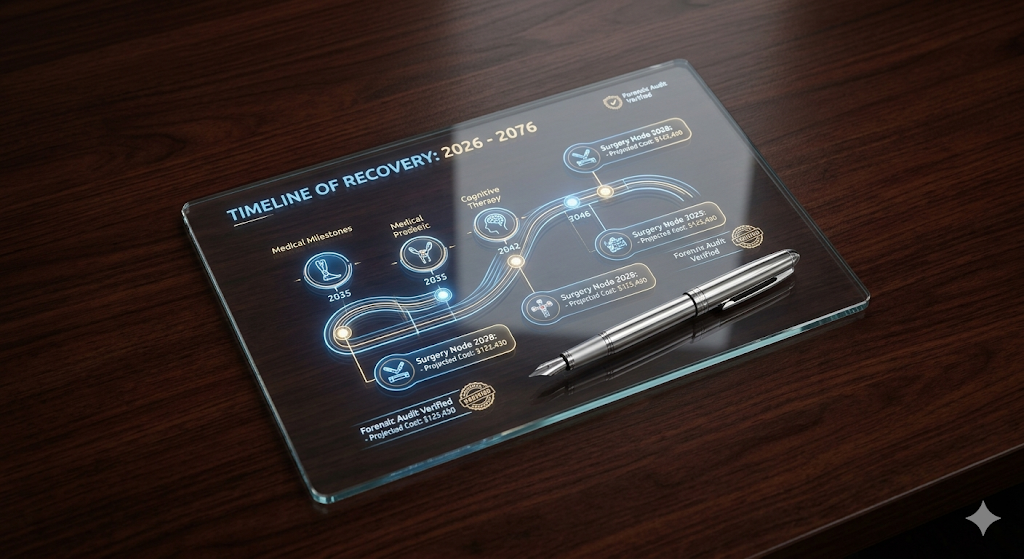
A Life Care Plan (LCP) is a detailed and adaptable document that outlines all the medical and non-medical requirements an injured individual will have for the rest of their life. In the current year of 2026, the complexity of these plans has advanced significantly, incorporating AI-based forecasts for medical cost inflation, schedules for bionic replacements, and smart home technology. Demonstrating to a Texas jury that a victim requires a “Future Care Fund” of $12 million demands a strategic blend of medical knowledge and economic prediction. This overview explains the operation of 2026 Life Care Plans within the context of legal proceedings in Texas.

1. The Anatomy of a 2026 Life Care Plan
In 2026, an LCP is more than just a fixed spreadsheet; it has evolved into a powerful tool that thoroughly examines all facets of the victim’s life. A typical plan for a significant Texas case consists of:
- Routine Medical Care: Costs for specialist visits (neurologists, physiatrists), diagnostic testing (MRIs, fMRI), and lab work.
- Therapeutic Modalities: 2026-era neuro-rehabilitation, specialized physical therapy, and AI-assisted psychological counseling.
- Durable Medical Equipment (DME): This is where costs skyrocket. It includes the purchase and maintenance of bionic prosthetics, exoskeletons, and customized 2026-standard motorized wheelchairs.
- Home and Vehicle Modifications: Redesigning living spaces to be 100% accessible, including high-tech environmental control systems for quadriplegic individuals.
In essence, every individual expense needs to be supported by “Geographic Pricing.” To meet the legal requirements, a Life Care Planner in 2026 should utilize precise cost information from the victim’s specific area in Texas, be it Houston, San Antonio, or the Permian Basin.
2. Medical Inflation and the “Discount Rate” Battle
The most technical phase of 2026 compensation litigation involves the Vocational Economist. Once the Life Care Planner identifies the needs, the economist translates them into dollars adjusted for the future.
Two critical factors define this “math” in 2026:
- Medical Inflation: Historically, medical costs rise faster than the standard CPI. In 2026, we utilize AI models to project these increases over the victim’s specific life expectancy.
- The Discount Rate: Because a settlement provides a “lump sum” today to cover expenses 40 years from now, Texas law requires the amount to be “discounted to present value.”
Insurance defense groups frequently advocate for a significant discount rate to reduce the overall payout. To combat this strategy, your legal team should engage specialists who can demonstrate that modest investment yields in 2026 might not match the rapidly increasing expenses associated with neuro-technology.
Compensation Matrix: Economic vs. Non-Economic Damages (Future Focus)
| Damage Category | Examples of Future Claims (2026) | Texas Legal Limit |
| Economic Damages | 24/7 nursing care, neural-link updates, future surgeries, lost inheritance. | Uncapped (Must be supported by an LCP). |
| Non-Economic | Loss of consortium, physical disfigurement, chronic phantom limb pain. | Uncapped (In general negligence cases). |
| Exemplary (Punitive) | Punishment for corporate safety-override that led to the permanent disability. | Capped (2x Economic + Non-Economic up to $750k). |
3. Surviving the Rule 166a Challenge to the LCP
According to the revised Texas Rule 166a effective on March 1, 2026, the defense may frequently submit a summary judgment motion labeled as “No-Evidence” directed at the LCP. Their claim will be centered on the assertion that the projected medical requirements are uncertain or that the approach of the experts is incorrect.
To defeat this motion, the Life Care Plan must be “Hardened”:
- Foundation in the Records: Every recommendation in the LCP must be linked to a specific medical diagnosis from a treating physician.
- Adherence to Peer-Reviewed Standards: The planner must demonstrate they followed the International Academy of Life Care Planners (IALCP) 2026 guidelines.
- Technological Justification: If a $500,000 bionic exoskeleton is included, the expert must prove why a cheaper, manual alternative is medically insufficient for the victim’s 2026 quality of life.
4. Common Questions Regarding Life Care Plans (FAQ)
Does a “mild” injury require a Life Care Plan?
Typically, no. LCPs are only considered for severe situations where the medical requirements are long-lasting. Nonetheless, in the case of a “moderate” TBI (Traumatic Brain Injury) that hinders a person from resuming their profession, a restricted Vocational Loss Analysis is frequently utilized.
Can the Life Care Plan be updated after the settlement?
This is considered the riskiest aspect of litigation in Texas. After reaching a settlement or getting a verdict, you only have one opportunity to seek compensation. If the Life Care Planner underestimated your future requirements, you won’t be able to request additional funds later on, like in 2030.
How does “Life Expectancy” affect the plan in 2026?
Life expectancy is a significant point of contention. Insurance firms may claim that the injury or the victim’s “lifestyle indicators” will shorten their life, leading to a decrease in the overall payout. To challenge this, we utilize advanced Actuarial AI that predicts life expectancy using recent medical advancements.
5. The “Day-in-the-Life” Connection
In 2026, a Life Care Plan is commonly accompanied by Cinematic Documentary Evidence. To help Texas jurors connect with the figures, a “Day-in-the-Life” movie is screened.
Presenting the challenges faced by a mother caring for her children from a wheelchair or the agony of a burn victim’s daily treatment session offers a “Human Context” for the monetary information. While numbers form the foundation in significant settlements, it is the emotional impact that sets the limit.
Conclusion: Securing a Future Without Financial Fear
A Life Care Plan goes beyond being just a legal document; it signifies a commitment to maintaining one’s dignity. In the intricate and inflation-prone economy of Texas in 2026, a severe injury could result in financial ruin within a short span of time if the compensation is not accurately calculated. By utilizing advanced AI-powered predictions, incorporating vocational economics, and adhering to the legal guidelines of Texas in 2026, individuals involved in legal disputes can guarantee that those accountable for their injuries cover the full extent of the damage over an extended period. In Texas, responsibility is evaluated over many years, and a carefully prepared Life Care Plan is the sole method to safeguard your future.
LEGAL DISCLAIMER: The content of this article is intended for educational and informative purposes exclusively, and it should not be considered as legal counsel or the establishment of a lawyer-client connection. Texas Life Care Planning, vocational economics, and regulations (CPRC Chapter 41, Rule 166a) are influenced by distinct court interpretations and legislative changes expected by 2026. The computation of forthcoming losses is a complex procedure. If you have experienced a severe injury, it is advisable to promptly seek advice from a certified Personal Injury Lawyer in Texas to explore your entitlements and guarantee the comprehensive safeguarding of your future well-being.